
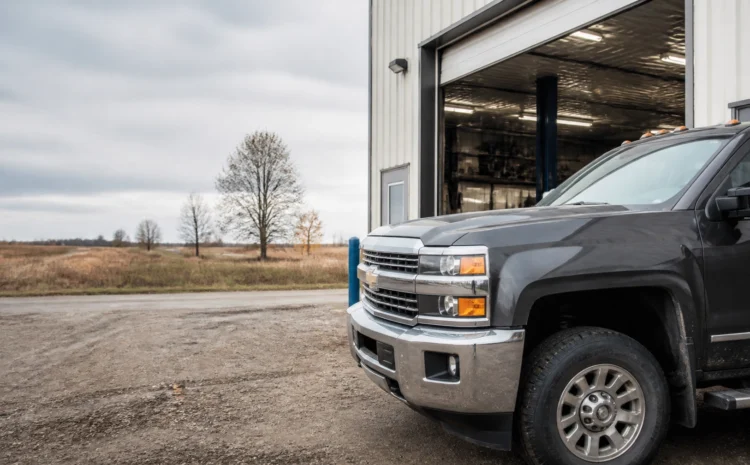
Truck Maintenance Secrets: Protecting Your Transmission and Differential for the Long Haul
If your pickup spends its days hauling tools, pulling trailers, carrying livestock supplies, or travelling gravel roads around Winkler and the Pembina Valley, it works harder than an average commuter vehicle. Towing and heavy loads place extra strain on the engine, transmission, driveshaft, axles, and differential. Cold Manitoba winters add another layer of stress.
That does not mean your truck is destined for expensive transmission repair or differential failure. It means maintenance needs to match the way you use the vehicle.
The key is understanding how heat, fluid condition, towing strain, and delayed repairs affect the drivetrain: and learning to recognize warning signs before a small problem becomes a major loss of work time.
Why truck drivetrain maintenance matters
Your transmission transfers engine power to the wheels while controlling speed and torque. The differential then distributes that power between the drive wheels, allowing them to rotate at different speeds when you turn.
These components contain gears, bearings, seals, clutches, and other precision parts. They operate under pressure and friction every time you accelerate, climb a hill, tow a trailer, or shift into four-wheel drive.
Fresh, correct-specification fluid acts like a protective layer between those moving parts. It lubricates gears, carries heat away, and helps hydraulic components operate properly. As fluid ages, it can become contaminated or lose its ability to protect surfaces. That allows heat and friction to build, much like running machinery with sand instead of oil.
For work trucks, regular maintenance is not just about extending vehicle life. It helps protect your schedule, your equipment, and your ability to get the job done when the roads are rough and the weather turns severe.
Towing creates heat: and heat is the enemy
Towing a loaded trailer or hauling a heavy payload makes the transmission work harder. The engine produces more torque, the transmission shifts under greater load, and the drivetrain must manage additional resistance.
That extra work creates heat. If the transmission fluid becomes too hot, its protective properties can deteriorate. Over time, overheated fluid may contribute to slipping, harsh shifts, clutch wear, and internal damage. Differential gear oil also breaks down under sustained load, especially during long towing trips, steep grades, or repeated stop-and-go work.
Watch for conditions that increase drivetrain heat:
- Pulling heavy trailers or equipment
- Carrying a consistently heavy payload
- Driving long distances in hot weather
- Climbing hills or travelling through deep snow
- Frequent low-speed work with high engine load
- Using four-wheel drive for extended periods
If your truck regularly handles these conditions, it should be treated as a severe-service vehicle. The “normal driving” schedule in an owner’s manual may not be the right schedule for a pickup used on farms, construction sites, or rural roads.
Fluid condition and service intervals
There is no single transmission or differential service interval that applies to every truck. The correct schedule depends on the vehicle, fluid type, drivetrain design, mileage, and workload. Your owner’s manual should always be the starting point.
However, heavy towing, gravel-road driving, and extreme temperatures generally justify shorter service intervals than ordinary highway use. Depending on the truck and manufacturer recommendations, differential fluid service may be needed around 30,000 to 50,000 kilometres in severe service. Transmission fluid service may also be required sooner than the normal interval, particularly when towing is frequent.
A proper inspection should look at more than fluid colour. A technician may check:
- Fluid level and signs of leakage
- Fluid condition and odour
- Metal particles or other contamination
- Transmission pan and filter condition, where applicable
- Differential seals, covers, and housing
- Driveshaft, universal joints, mounts, and related components
- Stored diagnostic trouble codes and shift performance
It is also important to use the correct fluid. Transmission and differential fluids are not interchangeable, and some differentials require a specific additive for limited-slip operation. The wrong product can affect lubrication, clutch operation, or gear protection.
For advice on broader winter preparation, see our guide to cold-weather car care in Manitoba.
Gravel roads can hide developing problems
Gravel roads around the Pembina Valley are part of everyday life for many truck owners. They connect farms, acreages, job sites, and rural communities: but washboard surfaces and loose stone can be hard on a drivetrain.
Repeated vibration and impact can accelerate wear in mounts, universal joints, bearings, and seals. Dust and debris can also collect around sealing surfaces. A slow leak may not leave a large puddle in your driveway, but even a small loss of fluid can eventually leave a transmission or differential running below its proper level.
Make it a habit to look underneath your truck after demanding work. Check for fresh oil around the transmission, transfer case, differential housing, and axle ends. Pay attention to new spots on the shop floor or driveway. A leak found early may involve a seal or gasket; a leak ignored for months can lead to inadequate lubrication and internal damage.
Warning signs you should not ignore
Drivetrain problems often announce themselves before the truck stops moving. The sound or behaviour may be subtle at first, especially when road noise, wind, and a loaded trailer are part of the drive. If something feels different, pay attention.
Transmission warning signs
A transmission may need inspection if you notice:
- Delayed engagement when shifting into Drive or Reverse
- Harsh, abrupt, or unusually soft shifts
- Engine RPM rising without a matching increase in speed
- Shuddering during acceleration
- A new clunk when changing gears
- Fluid that smells burnt
- Fluid leaks beneath the centre of the truck
- A sudden change in shift behaviour after towing
A delayed shift can feel like a brief pause before the truck catches up. That pause may indicate a hydraulic, electrical, fluid, or internal mechanical concern. Continuing to tow while the transmission is slipping can generate even more heat and turn a developing issue into extensive transmission repair.
Differential warning signs
Differentials often communicate through sound. Listen for:
- A whine that changes with road speed
- A howl under acceleration or while coasting
- Clunking when getting on or off the throttle
- Grinding or clicking while turning
- Vibration from the rear of the truck
- A burning, sulphur-like odour
- Thick gear oil around the axle housing or seals
A whine does not always identify one specific failed part. It may relate to gear wear, bearing wear, incorrect adjustment, fluid condition, or another driveline component. That is why it is risky to diagnose the source by sound alone.

Why professional diagnosis beats guessing
A clunk may come from the differential, but it could also involve a universal joint, driveshaft, mount, or suspension component. A vibration may be caused by a tire or wheel issue rather than the transmission. A harsh shift might be linked to fluid, an electronic control, a sensor, or internal wear.
Replacing parts based on a guess can be expensive: and may not solve the problem.
Professional diagnosis combines a road test, visual inspection, fluid evaluation, scan-tool information, and mechanical testing. At Pembina Valley Auto Service, licensed and certified technicians use modern diagnostic equipment to help identify the actual cause of a vehicle concern. That matters for pickup owners who need a clear repair plan instead of trial and error.
A good diagnosis also considers how the truck is used. A vehicle that commutes mostly on pavement has a different maintenance profile from one that spends the week towing, hauling, idling, and travelling gravel roads between Winkler, Morden, Altona, Carman, and surrounding rural areas.
Preparing your truck for a Manitoba winter
Cold weather affects more than starting performance. Fluids become thicker, seals contract, and a drivetrain with marginal lubrication may have a harder time during cold starts. Once a trailer is attached or a load is added, the system faces even greater demand.
Before winter settles in, have the drivetrain checked for:
- Transmission and differential fluid condition
- Leaks around seals and housings
- Delayed or harsh shifting
- Driveline vibration or unusual noises
- Battery and charging-system health
- Tire condition and wheel alignment
- Other maintenance items listed in the manufacturer schedule
Using synthetic fluid may improve cold-temperature flow, but only when it meets the specifications for your truck. Do not switch fluids based on a general recommendation alone. The manufacturer’s requirements matter.
A winter inspection is especially worthwhile if your truck has recently completed heavy towing, has been driven through deep snow, or has developed a new noise during cold mornings. Our winter vehicle care guide covers additional preparation for Manitoba driving.
Build maintenance around the work your truck does
The best maintenance plan is practical and consistent. Check for leaks during oil changes, record when transmission and differential fluids are serviced, and use the severe-service recommendations when your truck regularly tows, hauls, or travels gravel.
Do not wait for a warning light if the truck is whining, clunking, shuddering, slipping, or engaging gears slowly. Early attention can help limit damage and keep a repair more manageable.
Pembina Valley Auto Service has served Winkler and the surrounding region since 2004. Our team provides general maintenance, diagnostics, differential repairs, and other automotive services for pickups, trucks, vans, SUVs, and fleets, with a focus on honest recommendations and precise work.
Protect your truck before a drivetrain concern interrupts your next load or job. Contact Pembina Valley Auto Service or call 204-331-3326 to schedule a professional inspection in Winkler.